What Is AEO? The Complete Guide to Answer Engine Optimization for B2B SaaS (2026)

Kim Huong Tran9 Apr 2026
5 min read

What Is AEO? The Complete Guide to Answer Engine Optimization for B2B SaaS (2026)

"What is AEO?" comes up almost every time a growth-stage SaaS team stalled on organic starts asking better questions including grader. AEOThey have tried keyword-first SEO grader, hired an agency, and watched traffic creep up without predictable pipeline. Answer engine optimization (AEO) reframes the problem: search is no longer just about ranking pages for keywords. It is about owning the specific answers buyers expect during their journey. It's one piece of the bigger picture covered in our guide to generative engine optimization services.

AEO is the practice of structuring content, signals, and product experiences so search engines and AI-powered search layers deliver your company's precise solutions when users ask intent-driven questions. It's not a buzzword. It's a shift in emphasis — from ranking pages for single keywords to shaping discoverable answers across search surfaces: SERPs, rich results, AI chat layers, and in-product search. Pair this with what is a rich for a fuller view.

SEO helps search engines find your content. AEO helps search engines answer questions with your content. That distinction matters because answer engines — Google's AI overviews, ChatGPT, Perplexity, and other LLMs — increasingly serve direct answers instead of ten blue links. If your content isn't structured for extraction, you lose visibility where it counts most.

AEO has become part of serious SEO methodology because the companies that own answers own the consideration set. This guide explains what AEO is, how it differs from traditional search engine optimization, and the practical levers that drive traffic, leads, and attribution. If you're weighing this, our guide to generative search optimization is a useful next step.

AEO Explained: What It Is, How It Differs from SEO, and Why It Matters

Answer engine optimization is the practice of making your content the cited answer when search engines, AI assistants, and knowledge graphs respond to user questions. Unlike traditional SEO, which optimizes for page rankings on a list of search results, AEO optimizes for answer extraction — ensuring your content appears in the answer box, featured snippet, AI overview, or direct answer surface.

Why AEO Matters for Growth-Stage B2B SaaS

Buyers in the B2B SaaS space, particularly at Series A through pre-IPO stages, often pose tactical, product-driven queries. Your ideal customers are evaluating integration paths, pricing nuances, migration costs, and implementation timelines. These are critical questions that demand concise, actionable responses to facilitate their decision-making process and reduce friction in evaluation.

Traditional search focuses on top-funnel informational terms and hopes organic traffic trickles into qualified trials. AEO prioritizes the answer-first signals that directly influence product-qualified conversions. The shift matters because AI-powered search surfaces direct answers — and if your competitor's answer appears instead of yours, you lose consideration before the buyer visits your site.

Attribution expectations are higher than ever in the B2B SaaS landscape. Leadership demands that organic efforts demonstrate accountability to pipeline and ARR. With a well-structured AEO strategy, we design measurable answers: unique CTA variants, UTM-tagged micro-conversions, and inline trial triggers in answer surfaces. This allows us to trace the journey from question to answer to activation, proving the impact of our efforts.

How AEO Differs from Traditional SEO

1. Focus: intent and answer completeness vs. keyword volume

Traditional search engine optimization asks, "What high-volume keywords can we rank for?" AEO asks, "What exact questions do our buyers ask at decision moments, and which answers shorten time to trial?" That changes content choices: fewer generic guides, more decisional playbooks and product-centric explainers. Search engines understand context better than ever — matching user intent matters more than matching exact keywords. On a closely related note, see our guide to searchers intent.

2. Signal set: structured answers and entity signals vs. backlink-centric rankings

AEO emphasizes structured data, clear entity modeling, and content designed for extraction by AI answer layers. While backlinks remain important for overall SEO, authority building in the B2B SaaS context is shifting towards endorsements that enhance entity graphs — such as product documentation, developer references, partner pages, and curated case studies. Search engines prioritize content they can trust and verify, making these elements crucial.

3. Formats: modular answer blocks vs. long-form pages alone

We break answers into modular blocks — short definitions, comparison tables, code snippets, FAQs, and decision trees — so search and AI can surface precise fragments. Long-form content remains useful for depth, but modular snippets drive immediate discovery and intent capture. The answer box on a search results page pulls from structured, concise content — not from 3,000-word essays.

4. Measurement: conversion and downstream impact vs. rank and traffic vanity

AEO replaces single-channel KPIs with funnel-aware metrics: answer impressions in knowledge panels, clicks to trial from answer cards, trial conversion lift for users sourced from answer results, and revenue per answered lead. This is digital marketing measured by business outcomes, not visibility vanity.

Examples That Matter

  • Product migration question: Instead of a 3,000-word guide on "data migration," an AEO approach publishes an indexed migration checklist, a code sample for the most common edge case, and a short video demo. Each piece includes structured metadata and a trial CTA specific to migrations. Search engines and AI layers serve the exact snippet a buyer needs — and the CTA aligns with the intent.
  • Pricing TCO queries: Buyers ask "How much does X cost to run monthly?" We produce a concise calculator and a comparison table that can be extracted into rich results. That cited answer converts earlier and surfaces higher-intent buyers than a generic pricing page.

How to Implement an AEO Strategy Quickly: Practical Levers for B2B SaaS

We implement AEO as a sequence of high-impact, measurable moves — AEO requires and not a vague overhaul. Below are the practical levers we prioritize for growth-stage SaaS, roughly in the order we deploy them.

1. Map Decision-Stage Questions to Product Moments (3-5 Days)

Start with interviews: sales, success, and product teams list the exact questions that precede demo requests or trials. Convert those into a prioritized matrix: frequency times deal value times ease of answer. These are your immediate AEO targets. The data tells you which questions deserve investment.

2. Create Modular Answer Assets (1-3 Weeks per Pillar)

Instead of one long post, build short, standalone answer units for each prioritized question:

  • 150-300 word canonical answer that directly answers the question
  • A micro-FAQ with 3-5 follow-ups that address related queries
  • A one-click demo or sandbox link when appropriate
  • Structured data: FAQ schema, HowTo, Product schema, and calculator markup

This modular approach ensures fragments are extractable by AI agents and eligible for rich results on the search engine results page. Each answer unit functions as both a content hub and a conversion mechanism.

3. Instrument Answer-Level Attribution (First 2 Weeks, Then Ongoing)

Add answer-specific CTAs with unique tracking — UTMs, hidden trial codes, or tokenized CTAs that assign credit to the answer asset. Tie those to CRM fields so marketing and sales see which answer influenced activation. Measure: answer impressions, answer CTR, trial conversion rate, and ARR per answered lead.

Without attribution, leadership dismisses AEO as "just traffic." With attribution, you prove which direct answers drive pipeline and deserve more enterprise-level investment.

4. Technical Hygiene and Entity Modeling (2-4 Weeks)

  • Ensure schema is correct and machine-readable (JSON-LD for FAQs, HowTo, Product, and Pricing). Search engines understand structured data far better than unstructured prose.
  • Build an explicit entity graph on the site: product names, feature names, integrations, and supported platforms internally linked and normalized. This helps answer engines map your brand to the topics you want to own.
  • Improve canonicalization and response times. Modular snippets need to be reliably fetchable by crawlers and LLMs alike.

5. Programmatic Generation for Scale (2-6 Weeks)

Many decision questions are predictable: integration compatibility matrices strategies, API examples for languages, pricing permutations. Programmatic pages that follow a template but contain unique, canonicalized answers target hundreds of decision queries without manual drafting.

We pair programmatic outputs with strict editorial controls to avoid thin content. Each page must contain a genuine, verifiable answer — not just keyword variations. The platform should serve these pages efficiently to both users and search engine crawlers.

6. Authority Signals That Prove Accuracy (Ongoing)

Answer layers prize verifiable facts. Surface proof points close to the answer: short case study blurbs, screenshots of product outcomes, customer quotes with names and titles, and partner badges. Where feasible, publish machine-readable attestations (verified benchmarks, hosted datasets) to build trust with both human readers and AI systems.

Brand visibility in answer engines correlates with authority signals. The more verifiable your answers, the more likely LLMs and AI-powered search surfaces cite you as the source.

7. Feedback Loops: Test and Iterate (Continuous)

Deploy A/B tests at the answer level: different micro-CTAs, one-line summaries vs. bullet lists, or variations in schema. Track not just clicks but downstream activation and revenue. Iterate on the highest-value questions first. Media and services that monitor AI citations help you track visibility across platforms.

8. Align Sales Enablement and Site UX (2-4 Weeks)

Ensure the answer asset hands the lead to a relevant path: sandbox tools, tailored trial, or a product tour pre-filled with context from the question. Pass the question token so the demo highlights the exact feature. This reduces friction and increases the chance the answer converts into a qualified opportunity.

9. Monitor AI Answer Surfaces (Ongoing)

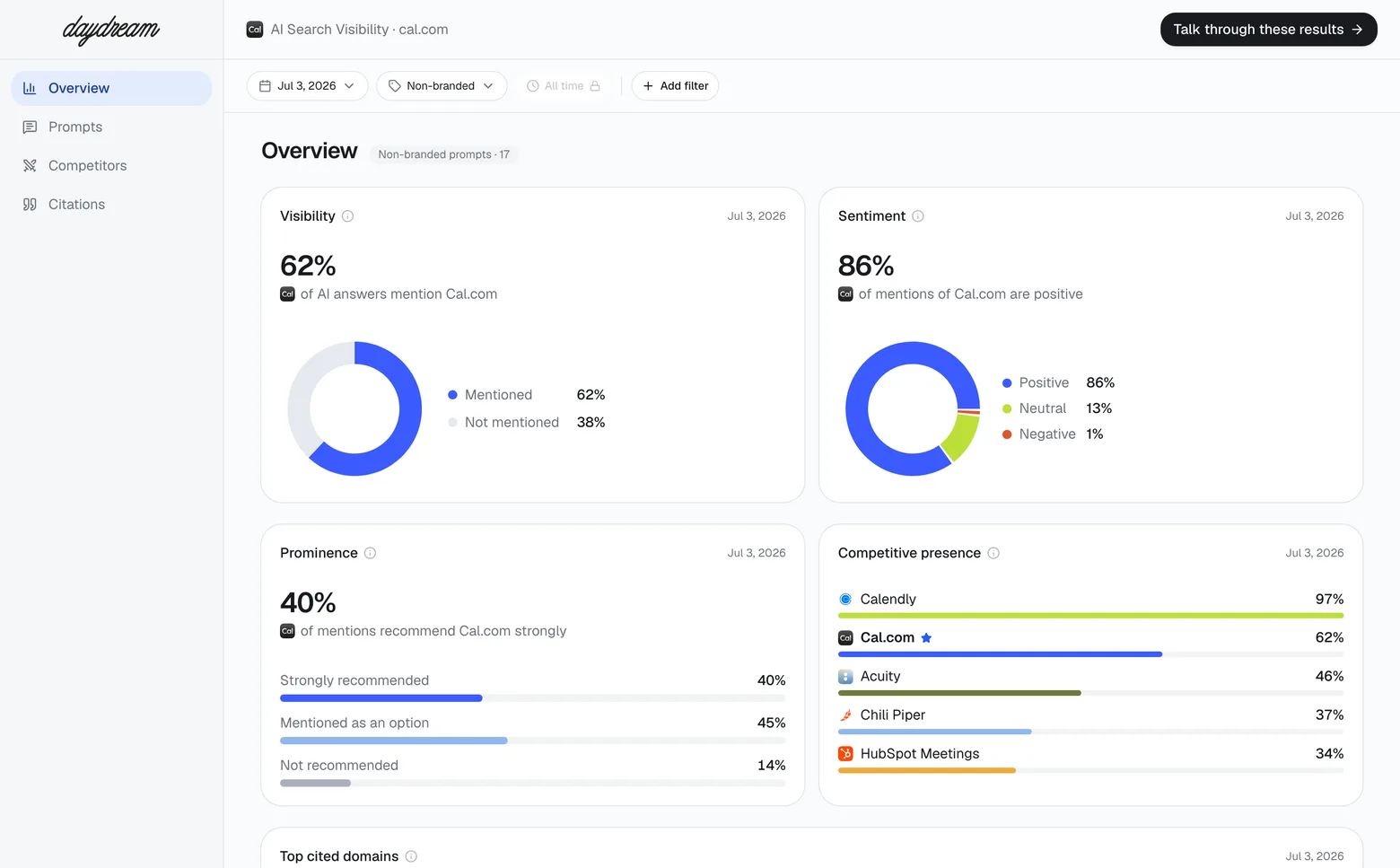
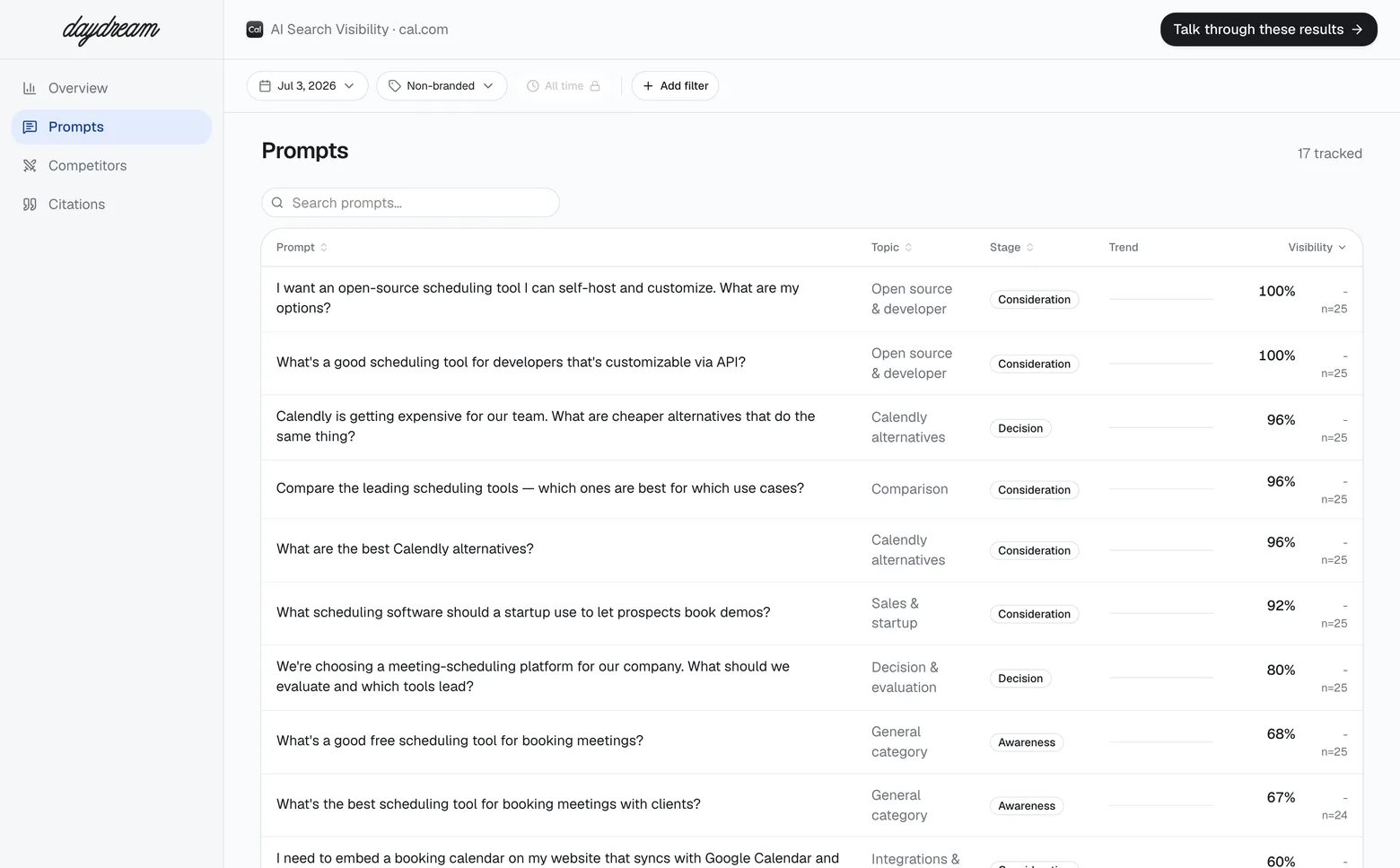
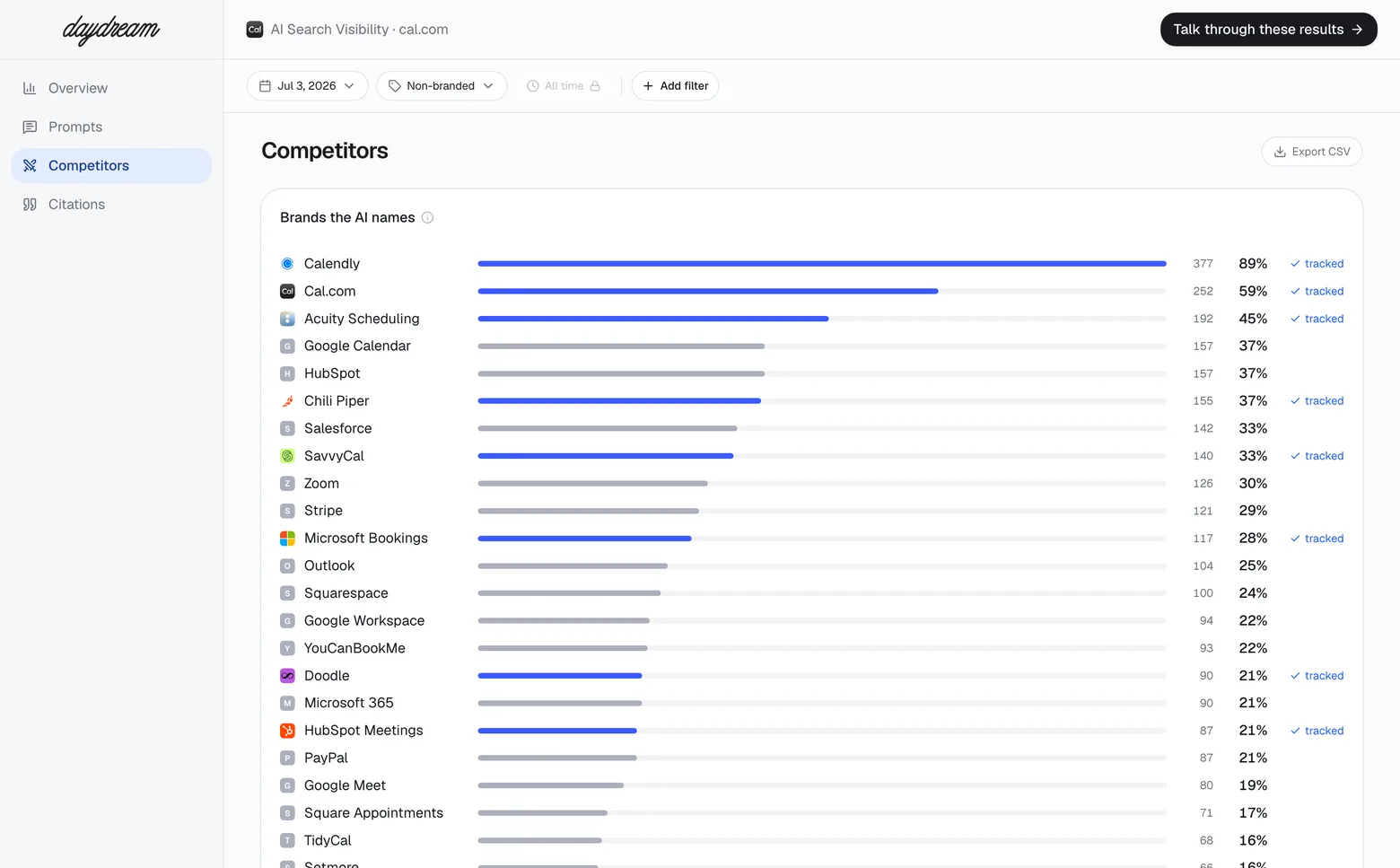
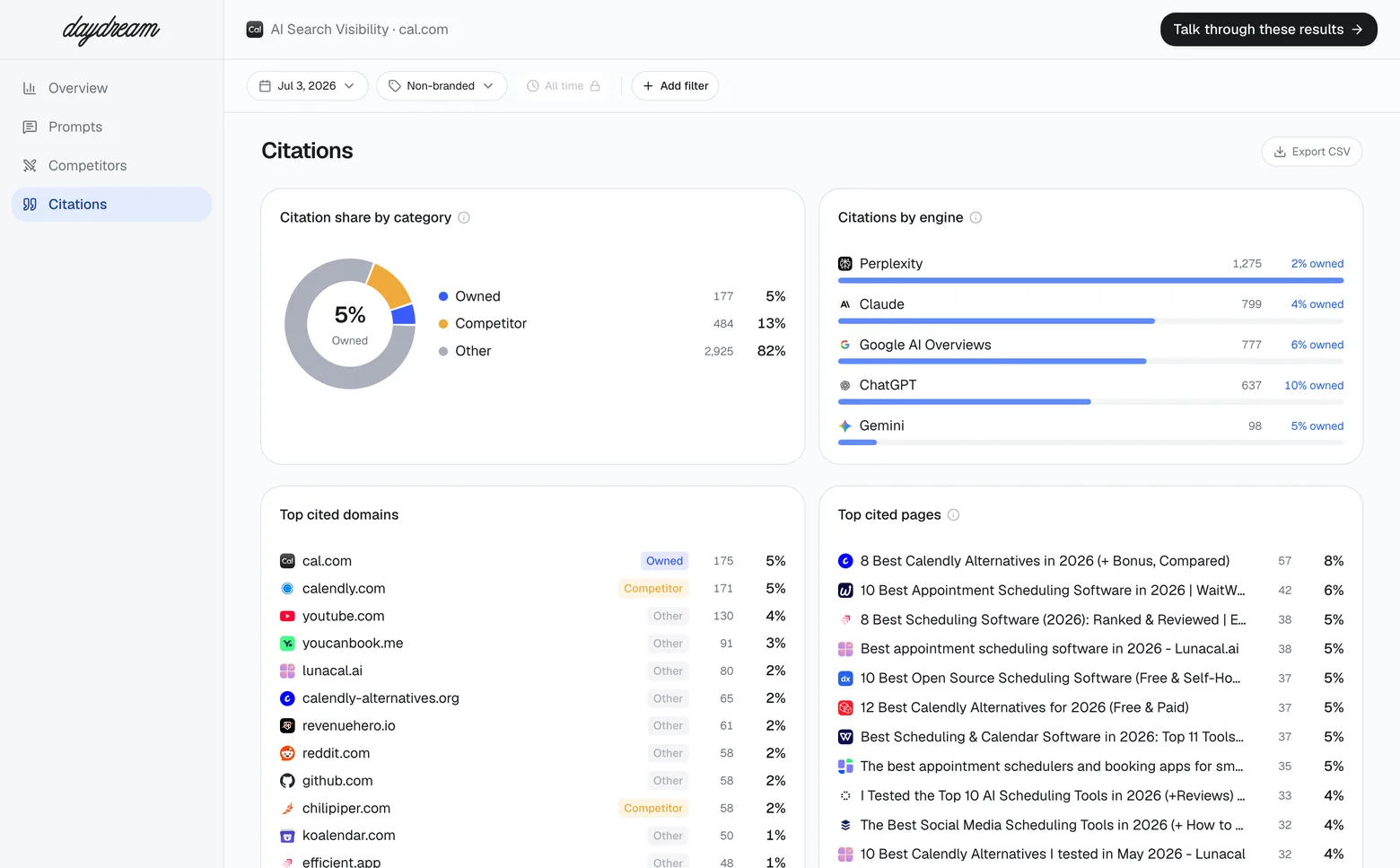
Track answer visibility across search, chat, and assistant layers. Use third-party monitoring and direct sampling — ask the same question across different AI platforms and document which asset surfaces. If an AI assistant uses your competitor's snippet, review extractability and trust signals. Then remediate.

The hub for AEO monitoring should include: Google Search Console for traditional search, third-party tools for AI overview tracking, and manual sampling of LLMs like ChatGPT and Perplexity. Your site needs to be the authoritative data source that engines answer with.

AEO for Different B2B SaaS Content Types

Different content types require different AEO approaches. Here's how to optimize each for answer extraction:

Product pages: Structure product features as question-answer pairs. Instead of a feature list, frame each feature as a solution to a specific problem. Include Product schema with pricing, features, and availability. AI-powered search surfaces product information when buyers ask "which tool does X" — make sure your page provides the extractable answer.

Comparison pages: Build structured comparison tables that answer "X vs Y" queries. Use clear column headers, consistent data points, and an explicit recommendation. These pages are highly extractable by answer engines because the tabular format translates cleanly into direct answers. Include schema markup for the comparison data. Pair this with our guide to what is schema markup for a fuller view.

Technical documentation: Developer-facing docs are prime AEO targets because developers ask highly specific questions. Structure docs with clear headings that match natural questions, code blocks with language annotations, and step-by-step procedures. HowTo schema works well here. Engines understand AEO platform, and surface well-structured technical content reliably.

Pricing pages: Pricing queries are high-intent and increasingly answered by AI. Structure your pricing with clear tier names, feature comparisons, and explicit pricing ranges. If you can't publish exact prices, provide ranges or starting points. The cited answer to "how much does X cost" should come from your site, not a third-party review.

Reformat case studies for AEO by leading with quantifiable outcomes, followed by the challenges faced, the approach taken, and the timeline. Include specific metrics that answer questions like 'What results did X achieve?' These data points are exactly what answer engines extract when users inquire about solutions to similar challenges, making them vital for visibility.

FAQ and resource hub pages: These are purpose-built for AEO. Each question should have a concise, standalone answer (40-60 words) followed by expanded detail. Use FAQ schema. Hub pages that link to deeper resources signal topical authority to both traditional search engines and AI answer layers.

Speed at Daydream: How We Approach AEO

A big-bang rewrite is the wrong approach. The first strategic deliverable — a priority matrix of decision questions and three modular answer assets targeted at the highest-value moment — should ship within the first week. From there, execution sequences across the full methodology: keyword strategy tuned to intent, technical schema, editorial modular content, programmatic scale, authority signals, AI visibility, and performance analytics.

The goal: measurable answer-driven trials in weeks including content strategy, not months.

Common Pitfalls to Avoid

  • Don't treat schema as a checkbox. Structured data is only useful when answers are factual, concise, and verifiable. Schema on thin content hurts more than it helps.
  • Don't duplicate answers across pages. Consolidate canonical answers and use canonical tags for programmatic variations. Answer engines penalize redundancy.
  • Don't ignore attribution. If you can't trace answers to pipeline, leadership will dismiss AEO as "just traffic."
  • Don't forget about traditional search. AEO complements SEO — it doesn't replace it. Search engines still drive the majority of B2B discovery. Build your AEO strategy on top of solid SEO foundations.

AEO and Traditional SEO: Working Together

AEO doesn't replace SEO. It extends it. Here's how the two disciplines complement each other in a unified organic strategy:

SEO provides the foundation. Technical health, crawlability, internal linking, and backlink authority remain essential. Search engines need to find, crawl, and trust your site before they'll extract answers from it. Without solid SEO fundamentals, AEO tactics have no surface to build on.

AEO optimizes the format. Once SEO ensures your content is discoverable, AEO ensures it's extractable. Structured data, modular answer blocks, and entity modeling transform rankable pages into answerable pages. The same content can serve both traditional search results and AI-powered answer surfaces when structured correctly.

Both share measurement. Track organic traffic from traditional search alongside answer impressions and citations from AI platforms. A unified dashboard shows total organic visibility — clicks from Google results plus visibility in AI overviews, featured snippets, and LLM responses. This comprehensive view prevents you from optimizing one surface at the expense of the other.

Content serves both. Well-written content with clear structure, factual claims, and specific data works for both SEO and AEO. The difference is formatting and markup, not substance. Write for humans. Structure for machines. Measure by pipeline. That approach serves every search surface — traditional search engines, AI-powered search, and direct LLM queries.

FAQ

What is AEO in digital marketing?

AEO stands for answer engine optimization. It's the practice of structuring content so search engines, AI assistants, and knowledge graphs deliver your company's solutions as direct answers when users ask questions — especially when hubspot is involved. Unlike traditional SEO, which focuses on ranking pages in search results, AEO focuses on owning the answer — appearing in featured snippets, answer boxes, AI overviews, and other direct-answer surfaces.

How is AEO different from SEO?

SEO helps search engines find and rank your content. AEO helps search engines and AI-powered search answer questions with your content. SEO optimizes for page rankings. AEO optimizes for answer extraction — structured data, modular content blocks, entity modeling, and formats that AI systems can parse and cite. Both matter. AEO builds on SEO foundations but shifts the optimization target from "rank this page" to "use this answer."

Do I need AEO if I already do SEO?

Yes. AI-powered search and LLMs increasingly serve direct answers instead of traditional search results. If your content isn't structured for answer extraction, competitors who invest in AEO will capture visibility in AI overviews, featured snippets, and chat-based search — even if your pages rank well in traditional results. AEO is an evolution of SEO, not a replacement.

How do you measure AEO success?

Track answer impressions across featured snippets, AI overviews, knowledge panels, and measure click-through rates from these answer surfaces. Monitor trial conversions from answer-attributed traffic and revenue per answered lead. Utilize Google Search Console for traditional search visibility, third-party tools for AI citation monitoring, and CRM attribution to connect answers to pipeline outcomes. The enterprise value of AEO is reflected in pipeline growth, not just impressions.

How long does AEO take to produce results?

Modular answer assets with proper schema can surface in featured snippets and answer boxes within 2-4 weeks. AI overview visibility depends on the platform's crawl and indexing cycle. Pipeline impact from answer-driven conversions typically shows within 60-90 days. Start with your 10 highest-value decision questions and expand from there.

The Future of AEO: What's Coming in 2026-2027

AEO is evolving rapidly as AI-powered search matures. Here are the trends we're tracking management, and preparing our clients for:

Multi-modal answers: Answer engines increasingly surface images, videos, and interactive elements alongside text. SaaS companies that produce structured visual content — annotated screenshots, architecture diagrams, short demo videos — will gain citation advantages in multi-modal answer surfaces. Prepare your content for visual extraction, not just text extraction.

Conversational search depth: Users ask follow-up questions in AI chat interfaces. Your content needs to anticipate the second and third question, not just the first. Building content clusters around question sequences — "what is X" followed by "how do I implement X" followed by "what does X cost" — ensures your brand appears throughout the conversation, not just at the first query.

Source attribution and trust: As LLMs face scrutiny over accuracy, answer engines are investing in source attribution. Content that includes verifiable data, named authors, and machine-readable citations will earn more citations. This aligns directly with E-E-A-T principles — trust and authority signals matter more in AI-powered search than in traditional rankings.

Enterprise adoption of AI search: B2B buyers increasingly use AI assistants as research tools during vendor evaluation. When a CTO asks an AI assistant "which tools handle X best," the answer shapes the consideration set. AEO ensures your product appears in these AI-mediated recommendations — which may become the most important visibility surface for enterprise SaaS.

Conclusion

AEO represents the practical evolution of organic strategies for B2B SaaS. It emphasizes answer-first content, extractable signals, and measurable transitions to product trials. For growth-stage companies seeking faster, attributable results, the focus should not be on producing more blog posts but on delivering smarter answers where buyers are actively seeking them. Concentrate on the decision-making questions, instrument every answer for tracking, and iterate based on real revenue signals. This approach transforms organic efforts into a predictable growth lever, whether the traffic originates from traditional search engines or AI-powered answer platforms.

About the author(s)

Kim Huong Tran

Founding Marketer

Kim Huong Tran

Kim has been making complex ideas feel simple for over a decade. She has built content programs from the ground up at AI/ML companies, shipped global campaigns, and written everything from customer stories to IPO communications. At daydream, she leads content and brand, working at the intersection of creativity and performance to shape how we show up. Outside of work, she creates content with her corgis.

Thenuka Karunaratne

Co-Founder & CEO

Thenuka Karunaratne

Thenuka started daydream to help high-growth companies turn organic search into a real growth channel. Before this, he founded Flixed, which drove over 100,000 subscribers to streaming services through programmatic SEO. He also serves as an SEO Expert in Residence for several venture capital firms, advising portfolio companies on organic growth. His interests range from Zen Buddhism to learning Mandarin Chinese, and he hosted a podcast called "Wandering with Thenuka."

daydream team

daydream team

The daydream team shares industry insights, expert strategies, and customer success stories to help brands understand the moments that matter most in search.

SEO is hard to win

daydream delivers an unfair advantage in organic search by combining a proven methodology with SEO agents and dedicated experts.

Get started on Full-Service