How we measure this

What we ask, where the questions come from, and what the numbers can and cannot tell you.

  1. 1. Start from real questions

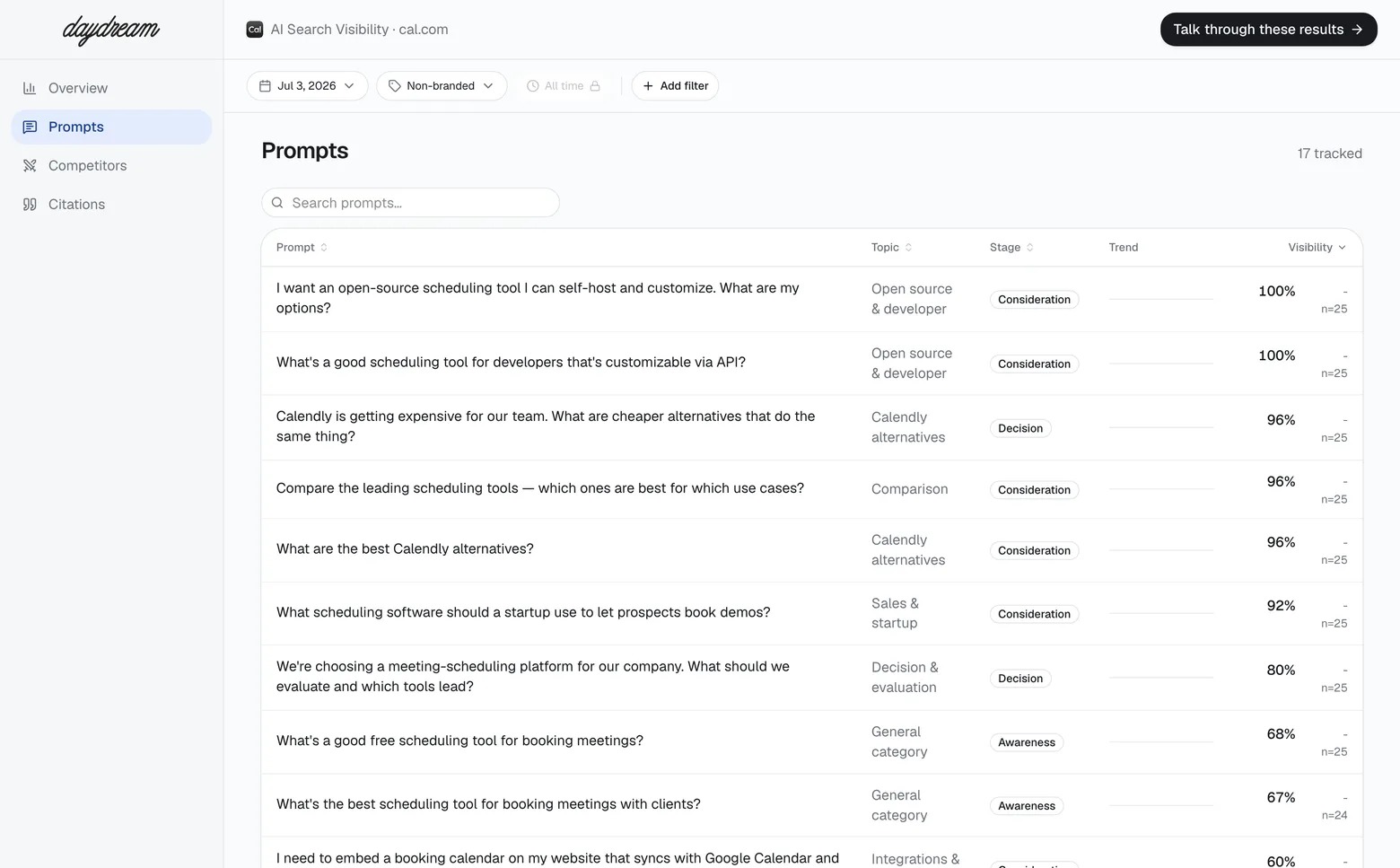
    Every question starts as something a person wrote, in a search or a forum post. We take out brand names, so every brand has an equal chance.

  2. 2. Build the set

    For each category, we pick the questions people ask AI when they compare options. Some ask which tool is best. Others ask how to do a task or fix a problem. The mix stops one kind of question from deciding the ranking.

  3. 3. Lock the set

    The questions are frozen before we collect any answers. We publish a sample for each category and keep the rest private, so no one can write pages aimed at the test. When the set changes between editions, we recalculate earlier editions on the questions that stayed. If we can’t, we drop the comparison rather than compare results from different questions.

  4. 4. Ask five AI tools

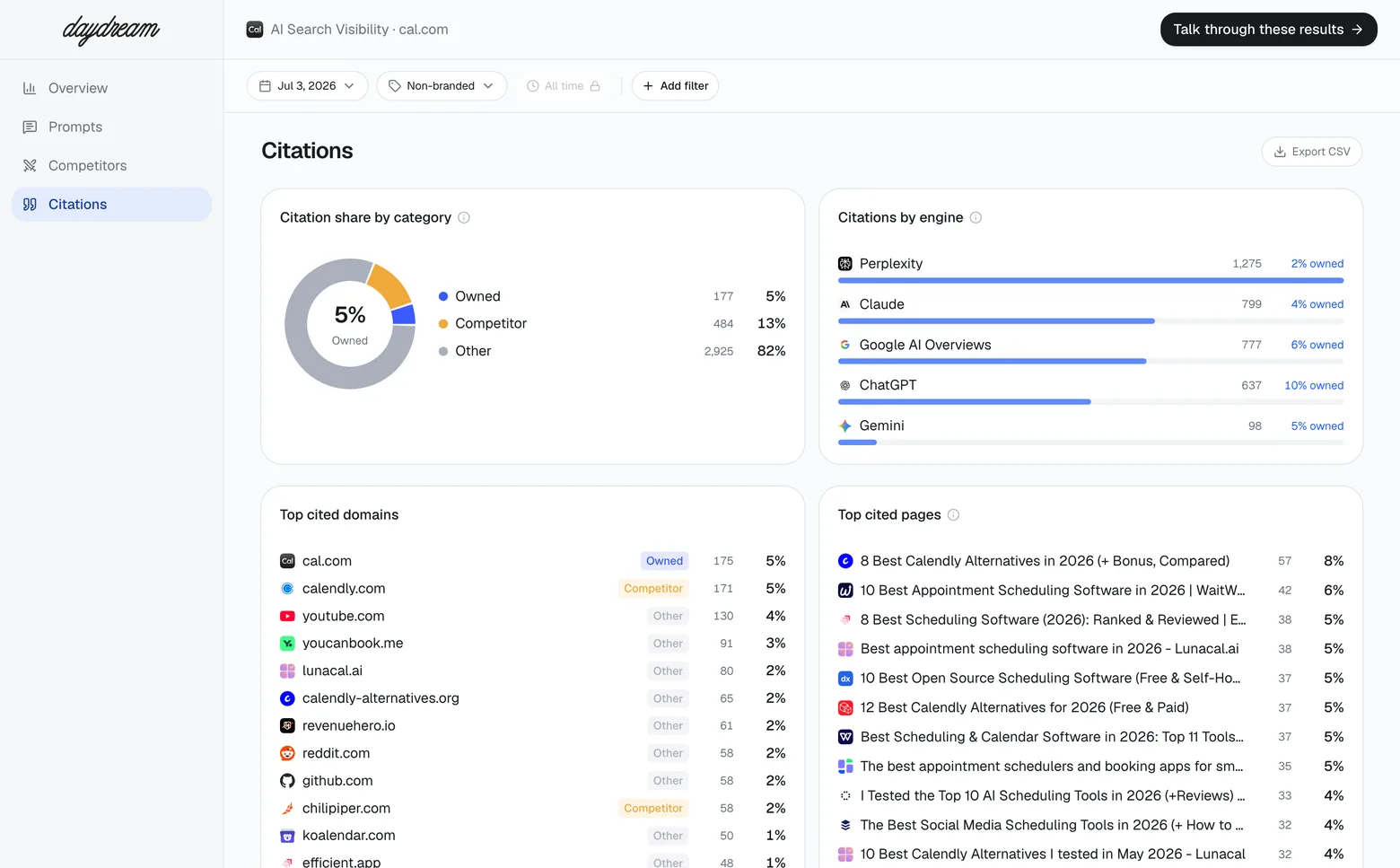
    We run every question through ChatGPT, Perplexity, Gemini, Claude, and Google AI Overviews, with web access on wherever the tool offers it. Each question is asked 3 times per tool, because the same question can return different answers on different runs, and we keep every answer rather than picking one.

  5. 5. Count the brands

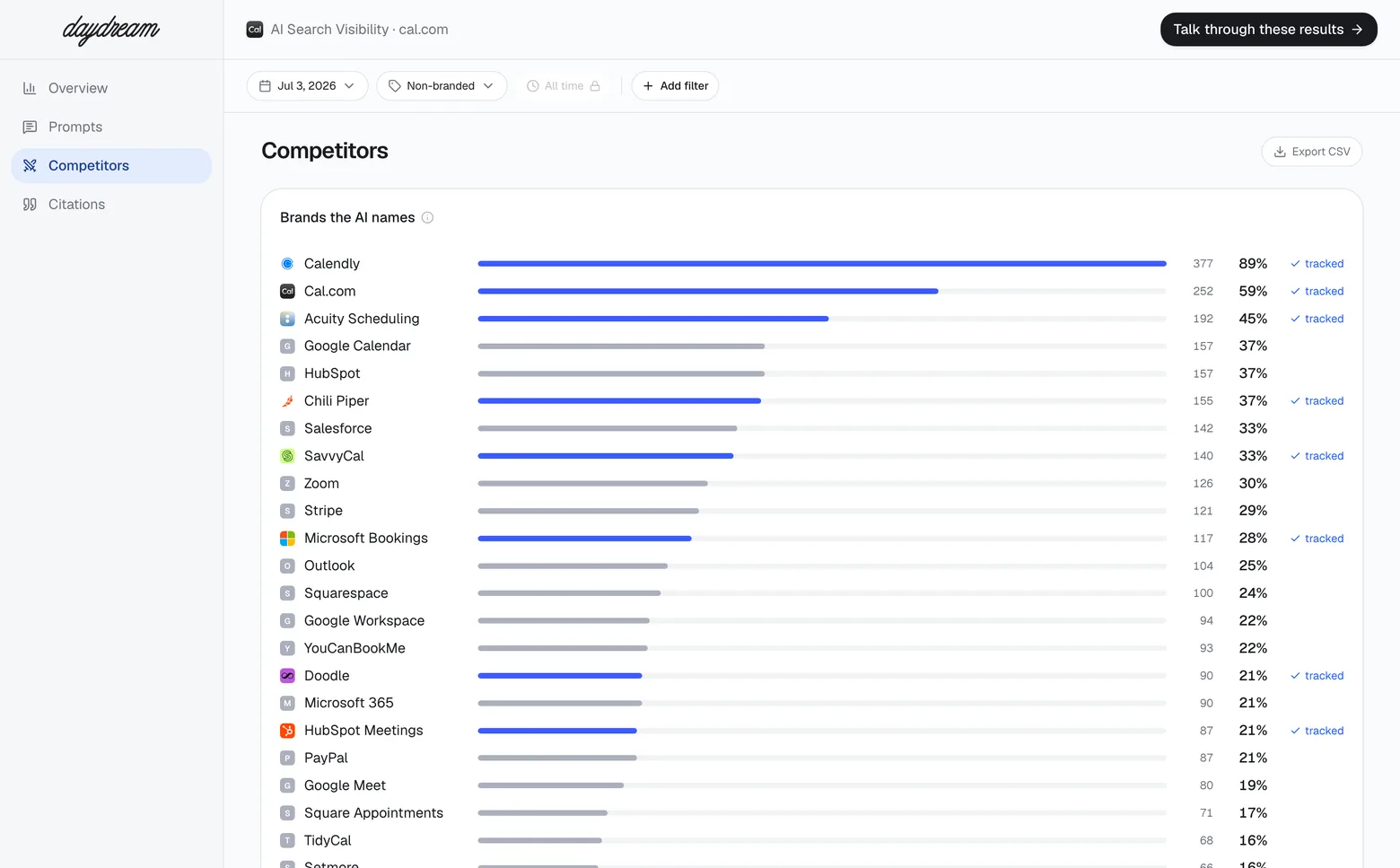
    A brand counts as present in an answer when its name appears in the text. We match on every name a brand goes by, including short forms, so a brand doesn’t lose points for a nickname.

  6. 6. Score and rank

    For each tool, a brand’s score is the percentage of answers that name it. The overall score is the average of those five numbers, so no single tool outweighs the others. Example: a brand named in 60% of ChatGPT answers, 80% of Perplexity answers, 40% of Gemini answers, 50% of Claude answers, and 30% of AI Overviews answers scores 52. Each edition is one dated run, so brands a few points apart are tied. We only call a change real when it’s bigger than the normal ups and downs.

  • The company size and budget table uses only questions we asked all three ways, so each column answers the same questions.
  • We also ask some questions that name a brand. We wrote those ourselves. They count in the websites table, not in the ranking.
  • The ranking shows how often AI recommends a brand. It isn’t an endorsement by daydream.