“The daydream team works at light speed ⚡️ Within a year, they produced content that now drives 40,000+ visits per month, or 80%+ of our non-branded traffic.”
- Company
- A zero-trust security solution, launched 2020, used by global companies.
- Industry
- zero-trust security solution
- Engagement
- Organic SEO
- Timeframe
- 12 months
- Site
- twingate.com
What you’ll learn
- How to use pSEO to capture organic traffic in competitive markets
- Strategies to develop high-quality pSEO content that enhances your brand’s authority
- The value of partnering with strategic thought partners like daydream to accelerate time to market
The challenge: grow organic visibility in a competitive space
Twingate, a cutting-edge cloud-based security service, enables organizations to provide employees with secure, remote access to their companies’ networks without a VPN. Since launching in 2020, Twingate has become a leading zero-trust security solution trusted by global companies like Fanatics, Blend, and Scopely.
Three years later, with a firmly established product market fit, Twingate needed to expand its visibility among IT professionals looking for security solutions. The challenge? Competing for prominent security keywords was prohibitively expensive for Twingate, who was up against legacy software providers with substantially higher marketing budgets and resources.
The hypothesis: reach more IT professionals by capturing less competitive long-tail keywords
Twingate recognized the potential of programmatic SEO (pSEO) to capture less competitive long-tail keyword traffic. By leveraging pSEO tactics, Twingate could go after less saturated SEO terms to generate substantial top-of-funnel traffic and help fuel its demand generation efforts. This approach would also allow Twingate to avoid the extensive time and resource investments typically required with traditional SEO strategies.
At a high level, Twingate’s pSEO strategy would involve:
- Identifying and analyzing a patterned set of long-tail keywords that IT professionals use when searching for network access and security challenges/solutions.
- Developing a system to automatically generate high-quality, relevant content addressing these queries.
The solution: partner with daydream to build and deploy differentiated content at scale
In late 2023, Twingate partnered with daydream to build the strategy and tactical tooling for its pSEO engine. Ben Arnstein, Director of GTM at Twingate, noted that while he could have worked with plenty of different SEO or pSEO agencies, he was drawn to daydream’s strategic and collaborative approach.
It was clear right away that they did a lot of upfront work to be a true strategic thought partner… working with daydream is like having an extra teammate.
Ben Arnstein, Director of GTM at Twingate
1. Identify winning pSEO strategies to scale
For the first phase of pSEO content development, Twingate wanted to focus on top-of-funnel traffic for brand-building. To do so, they would create top-ranking content for IT professionals in less saturated topics (i.e., long-tail keywords) adjacent to their core product. Our team identified two topics with significant long-tail potential:
- Cybersecurity vulnerabilities: Leveraging a combination of government and private company data sources, Twingate could create hundreds of pages about specific CVE (Common Vulnerabilities and Exposures) numbers.
- Data breach information: Capitalizing on IT professionals’ interest in corporate data breaches, Twingate could provide in-depth content about various breach events, targeting searches like “[Company] data breach.”
2. Enhance existing datasets to create value-add content
To balance content quality with scale and speed, daydream worked with Twingate’s GTM team to develop a robust, audience-informed content framework for both pSEO strategies. This approach focused on 1) creating content with higher value and relevance than existing resources and 2) innovatively repurposing datasets to generate differentiated, valuable content at scale.
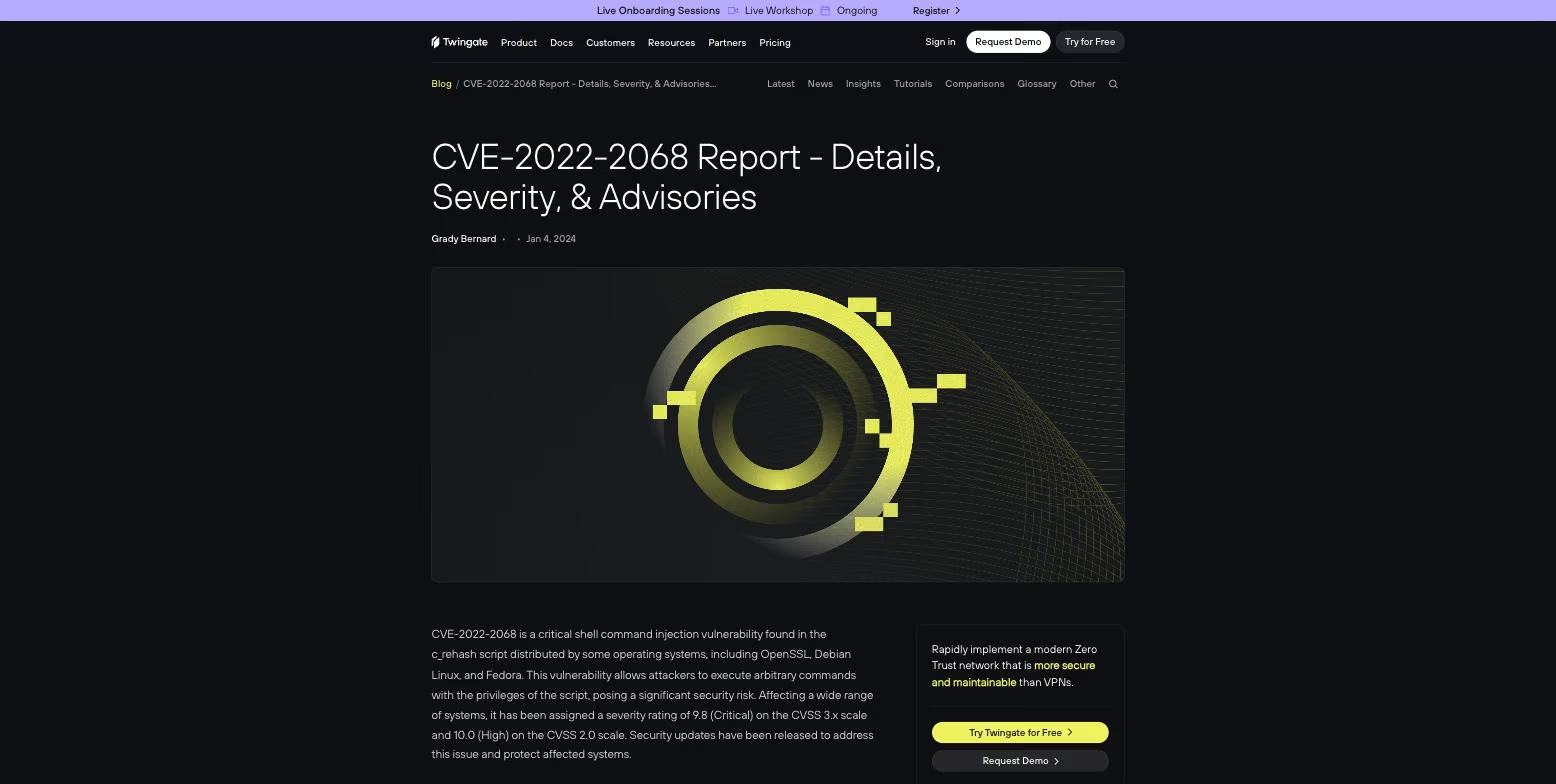
For the “cybersecurity vulnerabilities” pSEO strategy, our team found that existing content was often complex and challenging to interpret (see example here). We developed a content framework that leveraged existing datasets but presented information in a more accessible format. Our pages offer readers a simplified overview of vulnerabilities, including severity assessments and actionable mitigation steps.
Here’s an example of one of Twingate’s “CVE [number] Report - Details, Severity, & Advisories” pages.
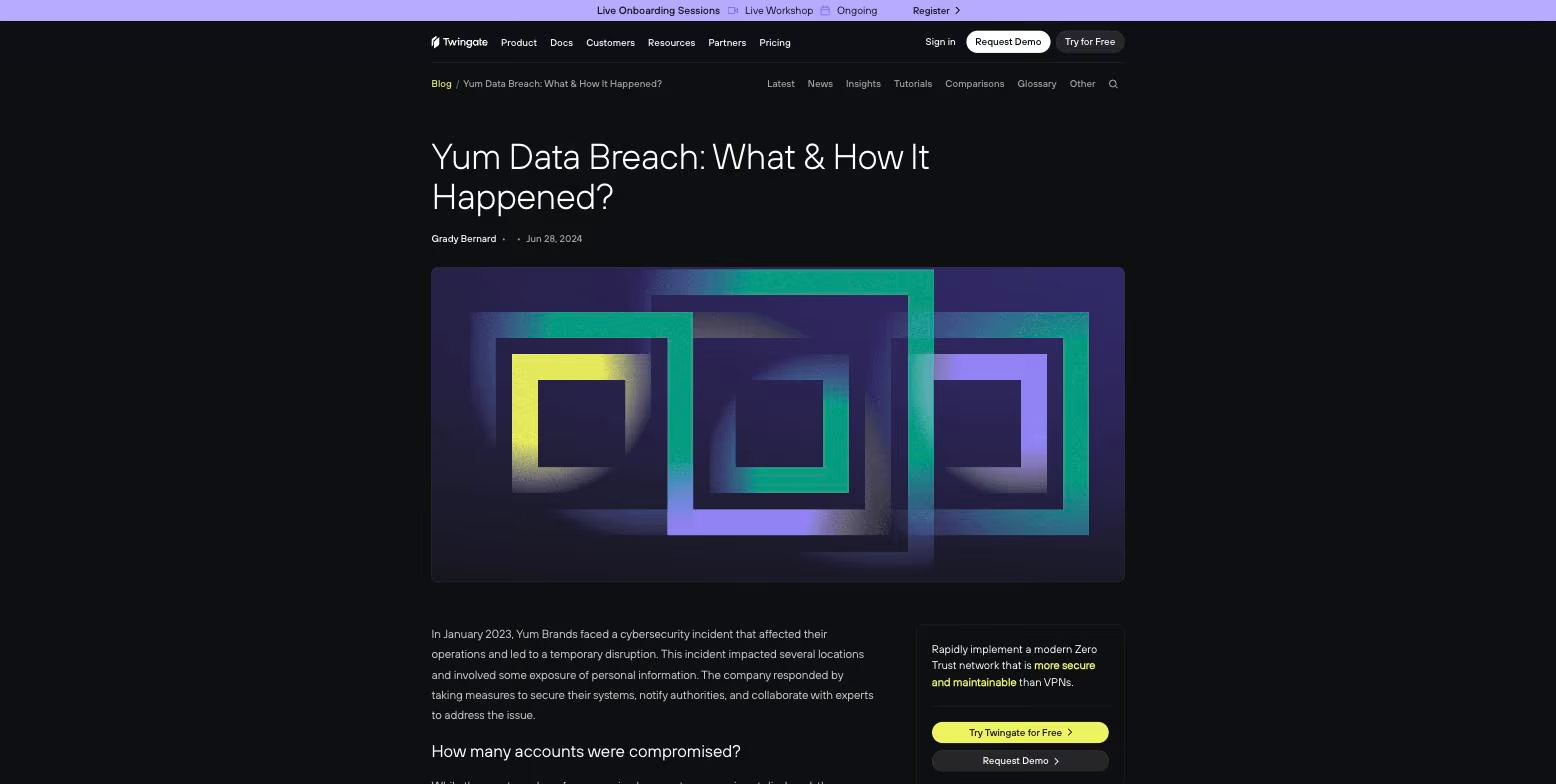
For the “company data breach” pSEO strategy, our team found that existing resources on company data breaches were often incomplete or failed to address IT professionals’ specific queries. To create higher-value content, we collected information from multiple sources (e.g., HaveIBeenPwned.com, company announcements, and news articles) to create robust, explanatory articles about each data breach.
Here’s an example of one of Twingate’s “[Company] Data Breach: What & How it Happened?” pages.
The results: the long-tail pages became most of Twingate’s non-branded traffic
Both page types went live through the first half of 2024, and the rankings moved before the traffic did. In November 2023, when the engagement began, Twingate held 128 keywords in the top three positions of US search. By June 2024 it held 745, a 5.8x increase, with a further 1,924 keywords sitting in positions four to ten and feeding the next wave.
Organic traffic followed. Ahrefs puts Twingate at 14,116 US organic visits a month in November 2023 and 26,607 by June 2024, and the curve steepens exactly where the CVE and data-breach pages were shipping rather than at the start of the engagement.
Twingate’s own analytics run ahead of that. Tony Huie, Twingate’s CEO and cofounder, reported that within a year the content daydream produced was driving more than 40,000 visits a month, and that those visits made up more than 80% of Twingate’s non-branded traffic. That last number is the one that mattered to the original brief. The goal was never traffic for its own sake, it was reaching IT professionals who had not heard of Twingate yet, and four out of five non-branded visits now arrive through this content.
The two figures differ because they measure different things. Ahrefs models US organic traffic from ranking positions and search volumes, so it sits below what a site sees in its own analytics, which counts every country and every visit.